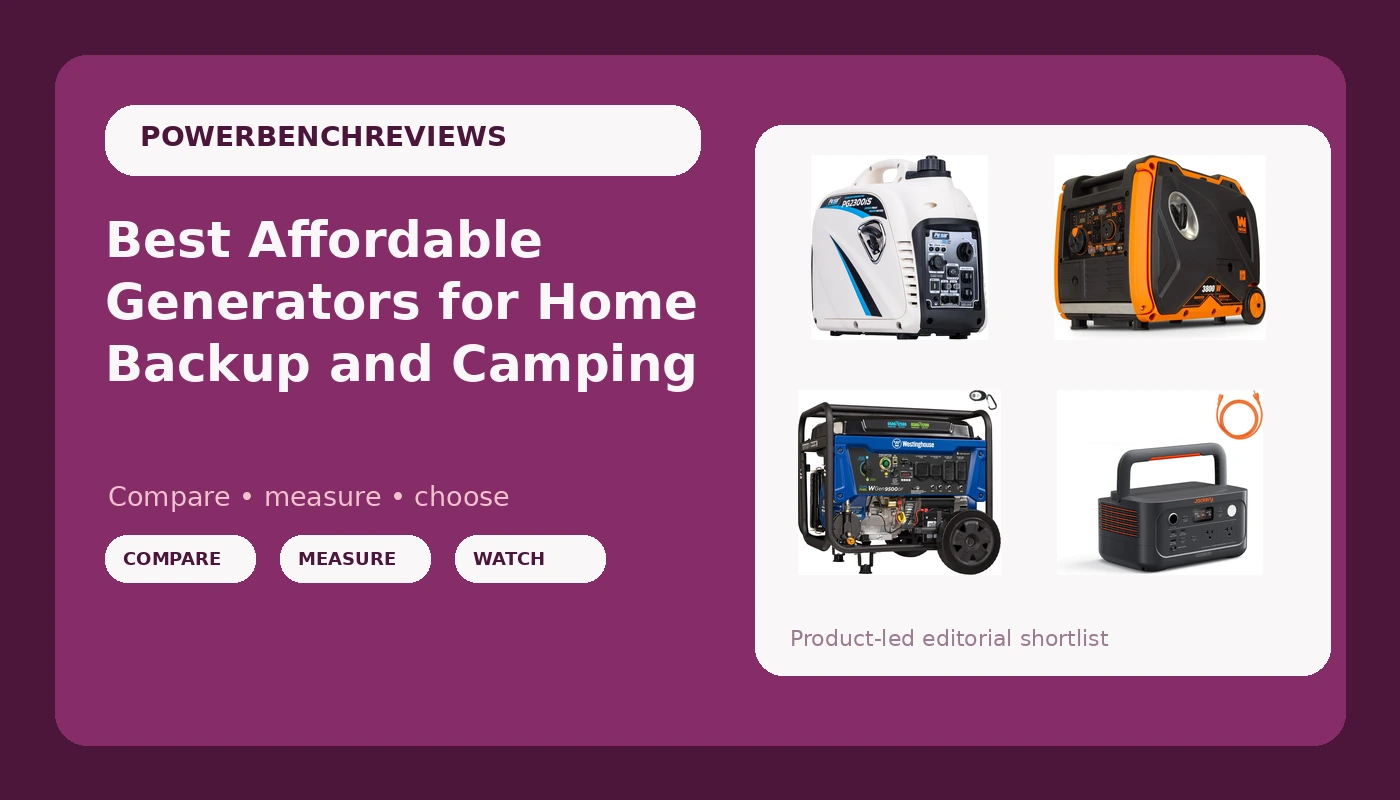
Affordable is a load calculation, not a sticker. Shopping for affordable generators usually starts with a number in mind and ends with a spec sheet full of surge watts, peak amps, and a "quiet" claim nobody measured. The useful question is narrower: what do you actually need to run, for how long, and can the machine do it without an electrician standing next to it?
This guide covers six units on the budget end of the market, from a 2,300 watt inverter you can carry in one hand to a 12,500 watt dual fuel machine built for a transfer switch, plus two battery-based options that skip fuel entirely. Every entry is judged on what the manufacturer and the listing actually state: running watts, fuel type, start method, RV provisions, and what comes in the box. Where a claim like "super quiet" comes from marketing rather than a meter, I say so.
Related: Inverter Generator vs Power Station: Which Fits Your Load?
Quick answer
The Oxseryn Power Equipment 4400 Watts Inverter Generator is the strongest fit for budget home backup and job-site power because it carries the highest inverter wattage in this roundup outside the whole-home Westinghouse, it has an ECO mode for lighter loads, and it is the lowest-priced machine here. Choose the Jackery Explorer 500 v2 instead when your loads are small, your space is indoors, and you want no fuel, no exhaust, and no pull cord.
Affordable generators worth comparing
The affordable generators on this page fall into three rough groups, and the group matters more than the brand. There are small, quiet gas inverters for trailers and tailgates, a dual fuel whole-home machine for transfer-switch duty, and battery-based stations that trade run time for silence and zero maintenance. Then there is the open-frame value play, which is where the most watts per dollar usually sit.
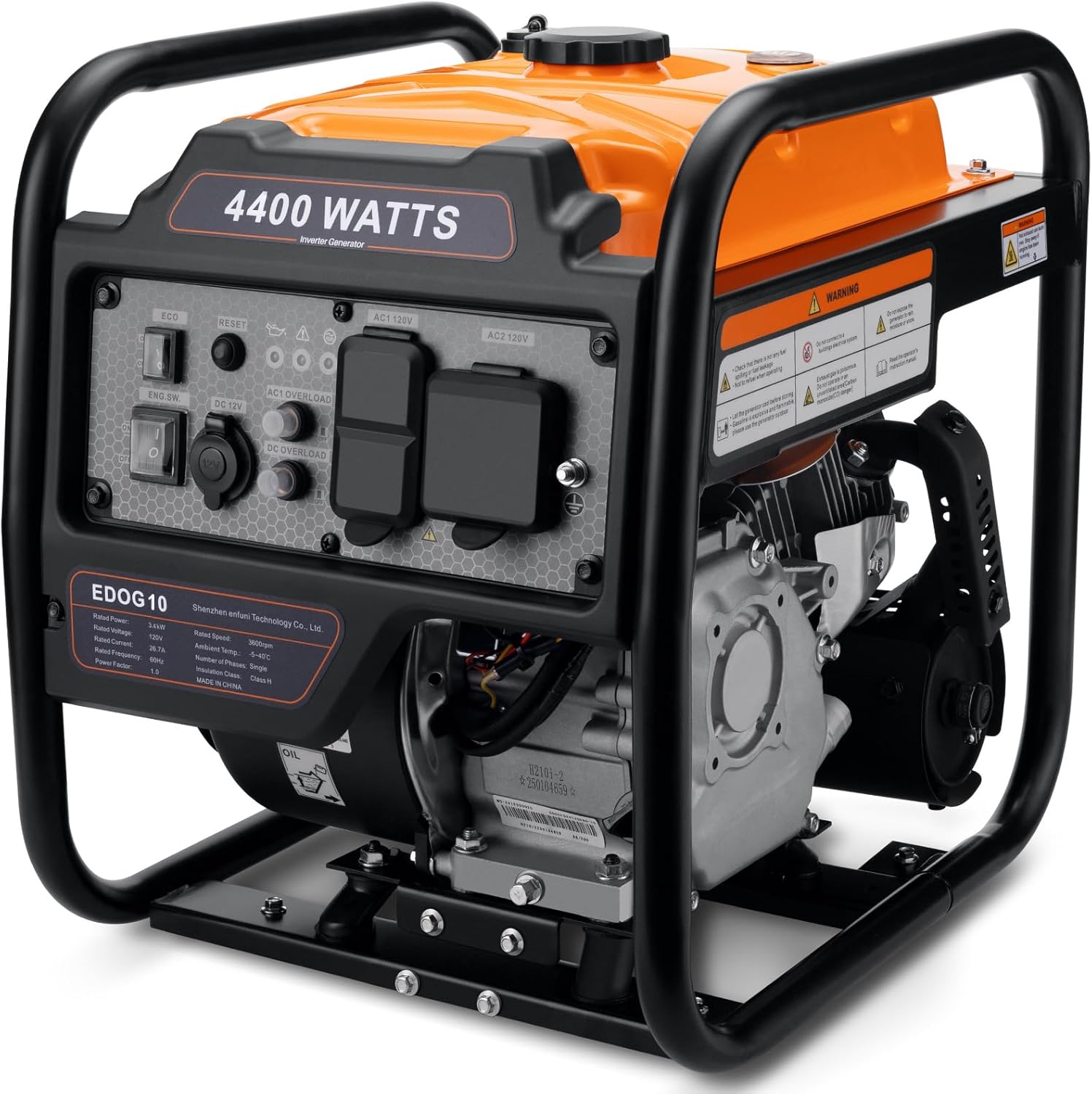
Oxseryn Power Equipment 4400 Watts Inverter Generator Gas Powered, Portable Open Frame Generator, Low Noise with ECO Mode, RV Ready, Emergency Home Backup
The value anchor of this group: a 4,400 watt gas inverter in an open frame with an ECO mode for lighter loads, listed as RV ready and positioned for emergency home backup. Lowest-priced unit on the page, and the one to check first if budget sets the ceiling.
Visit on Amazon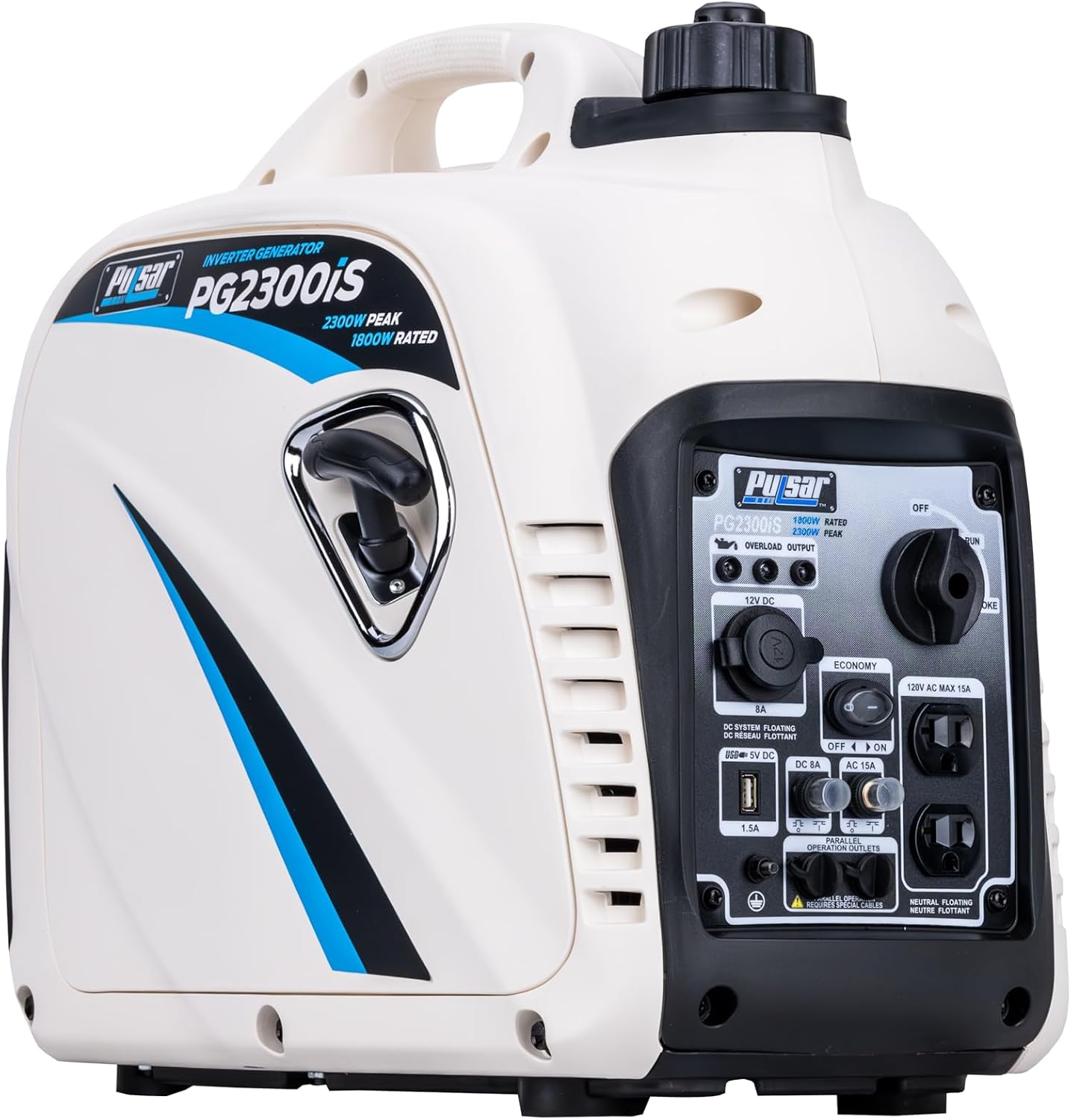
Pulsar PG2300iS 2,300W Portable Super Quiet Gas-Powered Inverter Generator with USB Outlet & Parallel Capability, CARB Compliant
A 2,300 watt inverter, the smallest unit here, with a USB outlet on the panel and parallel capability if you later want to pair two machines. CARB compliant, which matters for California buyers. Best fit for tailgates, small trailers, and light tool loads.
Visit on Amazon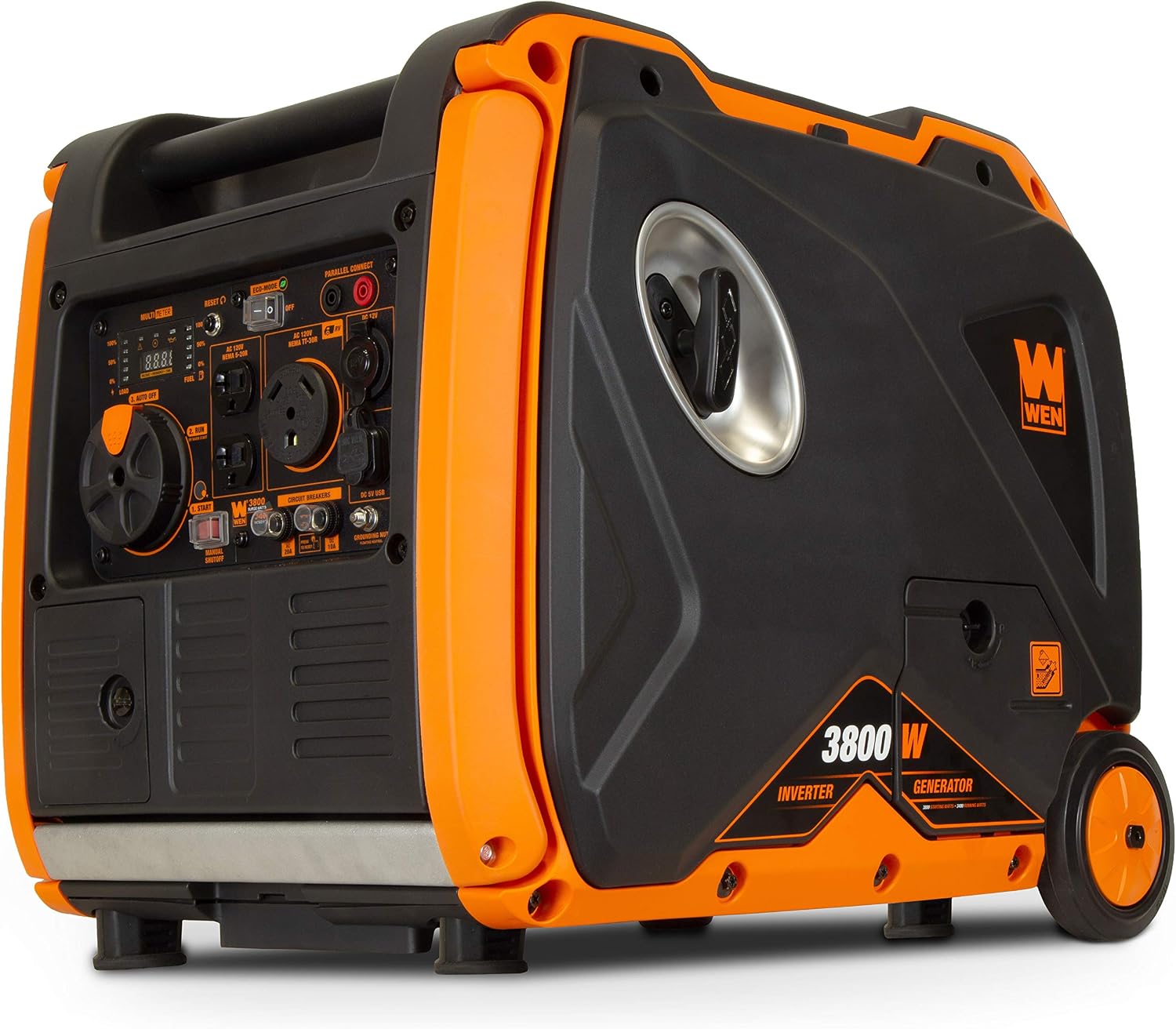
WEN Super Quiet 3800-Watt RV-Ready Portable Inverter Generator with Fuel Shut-Off and Electric Start (56380i)
3,800 watts, RV ready, with electric start and a fuel shut-off that lets you run the carburetor dry before storage. The capacity class that handles trailer loads and a few household circuits, and the middle of this group on both size and cost.
Visit on Amazon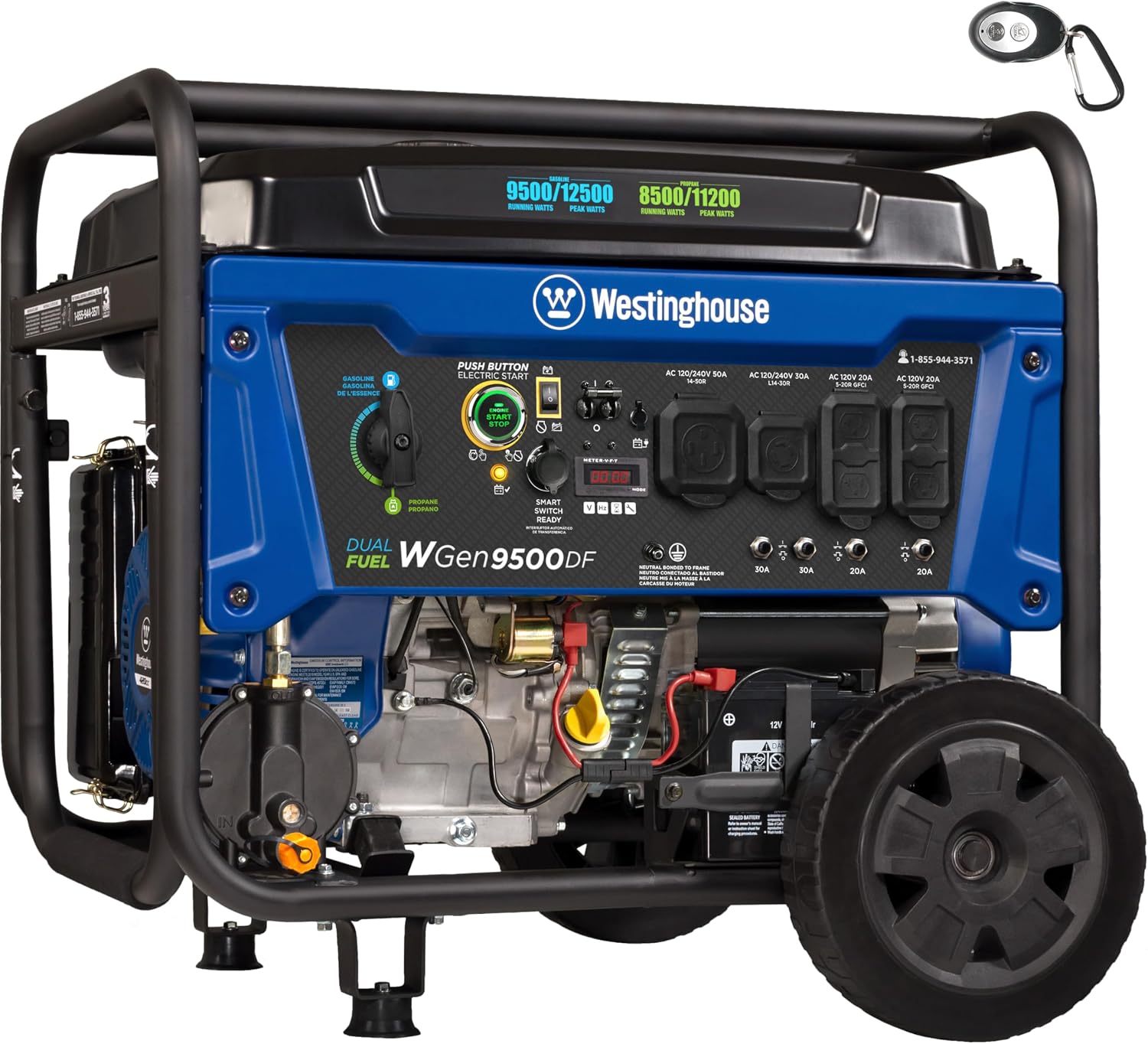
Westinghouse 12500 Watt Dual Fuel Home Backup Portable Generator, Remote Electric Start, Transfer Switch Ready, Gas and Propane Powered
Listed at 12,500 watts on gas or propane, with remote electric start and transfer-switch readiness. This is the whole-home end of the affordable range: more machine, more fuel, and more installation planning than anything else on this page.
Visit on Amazon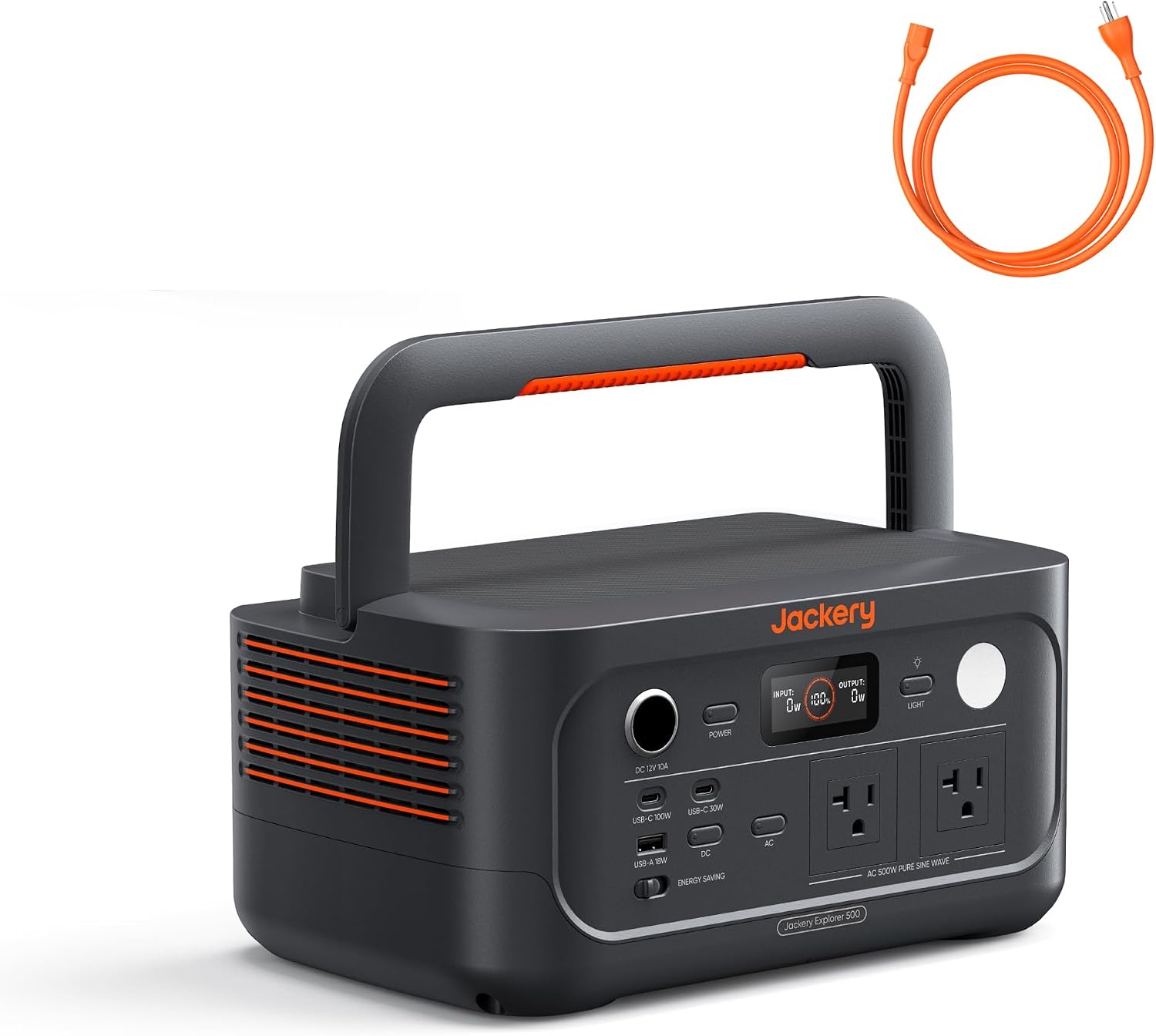
Jackery Explorer 500 v2 Portable Power Station,512Wh,500W AC
Check current Amazon price
512Wh of battery behind a 500W AC inverter, with no fuel, no exhaust, and no pull cord. The honest use case is phones, laptops, lights, a router, and a small fan. A 500W ceiling means a space heater is out and a full-size fridge is a gamble on start surge.
Visit on Amazon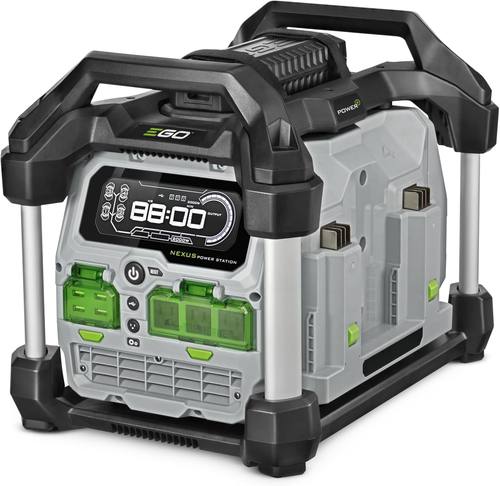
EGO POWER+ Portable Power Station, 3000W, Battery Powered, Inverter Generator for Home and Outdoor, Battery and Charger Not Included - PST3040
A 3,000 watt battery-powered inverter station sold as a bare tool: batteries and charger are not included, so the real cost depends on which EGO packs you already own. The highest output of the battery units here, with zero exhaust and zero fuel storage.
Visit on AmazonPrices and availability may change. Check the retailer for current details.
How these products were compared
This guide compares sustained running watts and starting headroom, fuel type and start method, the noise claims each manufacturer makes, RV and outlet provisions, and what actually ships in the box. Those five criteria are where affordable generators differ most, and where a cheap unit stops being cheap after the first season.
Two things this page does not do. It does not print a price, because listings move weekly and a number in a sentence ages badly; every card links to the current listing instead. And it does not dress catalog specs up as bench numbers. The best affordable generators are not the cheapest boxes on the shelf, they are the ones whose specs still make sense in year three, so the wattages, capacities, and features below are what the manufacturer and the listing state. Where a claim needs a meter to confirm, such as "super quiet" or "low noise with ECO mode," treat it as a claim until you hear the unit run under load.
Product names, images, and retailer links are matched to the same listing, so every card points to the product shown. That matters with budget brands, where two model names can sit one digit apart and one of them is the wrong machine.
How to choose the right generator
Start with a load list, not a wattage. Write down what you want to run and add the running watts, then add the largest starting surge on top of that total, because a fridge, a well pump, or an air compressor can pull several times its running rating for a second or two. A 4,400 watt inverter and a 12,500 watt dual fuel unit are not competing for the same job. One is a portable problem solver that fits in a truck bed; the other is home infrastructure that wants a transfer switch and a permanent fuel plan.
Fuel type decides more than the spec sheet does. Gasoline is easy to find and goes stale in months; propane stores for years and costs some output, which is why dual fuel machines are worth checking on both ratings. Noise is the other half of the decision. An enclosed inverter unit is quieter than an open-frame one, and ECO mode only helps when the load is light enough for the engine to throttle down. If your loads are small and you want nothing to do with fuel cans, a battery station changes the math completely, and my guide to sizing a power station for real loads works through watt-hours versus watts before you spend anything.
One packaging trap: the EGO station is a bare tool. If you already own EGO batteries and a charger, it is a different value proposition than for someone starting from zero, and the same logic applies to any battery platform purchase.
Oxseryn Power Equipment 4400 Watts Inverter Generator
The case for the Oxseryn is arithmetic. It carries 4,400 watts of inverter output, more than anything here short of the Westinghouse, at the lowest cost in the group. Inverter output matters for two reasons: inverter units produce a cleaner waveform than conventional generators, which sensitive electronics tolerate better, and ECO mode lets the engine throttle down when the load drops, which is where the fuel savings and the quieter running come from on a light load.
The listing describes it as RV ready, low noise in ECO mode, and aimed at emergency home backup. Those are reasonable claims for the class, but "low noise" on an open-frame unit is relative. Open frame means the engine and alternator are exposed, so it will be louder than an enclosed machine and it will not enjoy running in rain without shelter.
The trade-off is brand depth and convenience features. This is a budget name, and the listing does not advertise electric start or a fuel shut-off. If a push-button start and a carburetor you can run dry before storage are worth paying for, the WEN covers both. If you want the most inverter watts for the money and you will actually do the oil changes, this is the pick.
Alternatives to consider
The WEN Super Quiet 3800-Watt RV-Ready Portable Inverter Generator is better suited to trailer owners who want electric start, a fuel shut-off, and an enclosed, quieter package, while the Pulsar PG2300iS is a stronger fit when the loads are small, the storage space is tight, and parallel capability matters more than raw wattage. The Pulsar is also the only unit here that states CARB compliance, which is a hard requirement in California.
The Westinghouse 12500 Watt Dual Fuel, the Jackery Explorer 500 v2, and the EGO POWER+ Portable Power Station cover the three remaining cases. Westinghouse is whole-home backup: remote start, transfer-switch ready, and propane as a second fuel. The Jackery is the no-fuel answer for small loads, with 512Wh of capacity and a 500W AC inverter as a hard ceiling. The EGO sits above it on output at 3,000 watts, but the batteries and charger are separate purchases, so the math only works if you are already on that platform.
Day-to-day use and maintenance
The most common way an affordable generator dies is old fuel sitting in a carburetor. Use fresh gasoline, add stabilizer if the unit will sit, and prefer ethanol-free fuel where you can get it. Run the machine under load for a while each month rather than letting it idle, change the oil on the schedule in the manual, and check the air filter and spark plug at the start of every season. On units with a fuel shut-off, close the valve and let the engine burn the bowl dry before storage; on units without one, drain the float bowl by hand.
Battery stations need almost none of that. Store them in a cool, dry place, top them up every few months, and never park one at zero percent for the winter. Check the cell chemistry on the listing before you buy, because a pack you plan to cycle for a decade should be a chemistry the manufacturer is willing to name.
Safety is not negotiable on the gas side. Carbon monoxide is invisible, so no garage, no basement, no attached breech of the house, and no running a unit near a window or door opening even with the exhaust pointed away. Put a battery CO alarm in the room closest to where the machine runs. Battery stations produce no exhaust, which is exactly why they get used indoors and why they get bought in the first place.
Buying checklist
- Measure the storage spot, the door width, and the ground you will run it on, and plan where the exhaust will point.
- Choose running watts from a real load list, not from the biggest surge number printed on the box.
- Confirm the exact model includes the feature you need: electric start, fuel shut-off, RV outlet, or batteries and charger in the box.
- Read the oil change, break-in, and fuel storage instructions before the first start.
- Verify the current retailer price, availability, and return terms.
Final recommendation
Choose the Oxseryn Power Equipment 4400 Watts Inverter Generator when the budget sets the ceiling and you want the most inverter watts for the money, with the understanding that you are buying a budget name and doing the maintenance yourself. Choose the Jackery Explorer 500 v2 when your loads are small, quiet matters, and you never want to touch a fuel can, and step up to the WEN if you tow a trailer and want electric start with a fuel shut-off. If you cannot yet list what you need to run and for how long, buy nothing this week. The load list costs nothing and it decides everything else.