Two numbers decide whether a 12V car fridge power station setup works: the watt-hours your fridge actually eats between sunset and sunrise, and whether you feed it through the inverter or straight off the DC socket. Get the first one wrong and you wake up to warm cheese. Get the second one wrong and you hand 15 to 20 percent of your battery to an inverter you never needed to switch on.
I run a converted 2004 Sprinter and a chest fridge that has lived in it for six summers. Before that I spent 12 years pulling wire as an electrician, and the habit that stuck is this one: do the load math before you buy anything. A fridge is a compressor, and a compressor is a duty cycle, not a constant load. Once you know the duty cycle, the battery size picks itself.
This is the small-station version of that job. One 192Wh class unit, one DC cord, and a repeatable way to keep food cold overnight or across a weekend without dragging a second battery into the van.
Why you should trust me
I am Dan, an electrician of 12 years who now runs a small solar install business out of Salida, Colorado, and reviews power gear the rest of the time. Our grid drops for days every wildfire season, so backup power here is not a hobby, it is a Tuesday.
I have bench tested more than 30 power stations over the last five years with a Kill A Watt meter, a thermal camera, and a paper logbook. Every number in my reviews comes off a meter or out of the logbook. When I am handing you arithmetic instead of a measurement, I say so, and that is most of what this article is. The math is what tells you whether a 192Wh battery is the right tool for your fridge or the wrong one.
How I picked and how I tested
For a fridge job I look at four things and ignore the rest.
Usable watt-hours, not watts. A station is a bucket, and the bucket is measured in watt-hours. The 300W rating tells you what the inverter can push through at once. The 192Wh tells you how long you can push it. Fridge work is a bucket problem.
DC output honesty. A fridge does not need an inverter. The compressor runs on 12V DC, and most fridges ship with an AC brick that turns your station's AC right back into 12V DC. That is two conversions to arrive where you started, and each one costs you energy as heat.
Cord fit and fuse. The cord is the cheapest part of the build and the one that fails first. I check the plug on the fridge end, the plug on the battery end, the wire gauge, and whether the plug is fused.
Duty cycle in real weather. A fridge in 70 degree shade and a fridge in a 95 degree van are different appliances. Any runtime claim that ignores ambient temperature is marketing.
The gear for this job
Two pieces. That is the whole build.
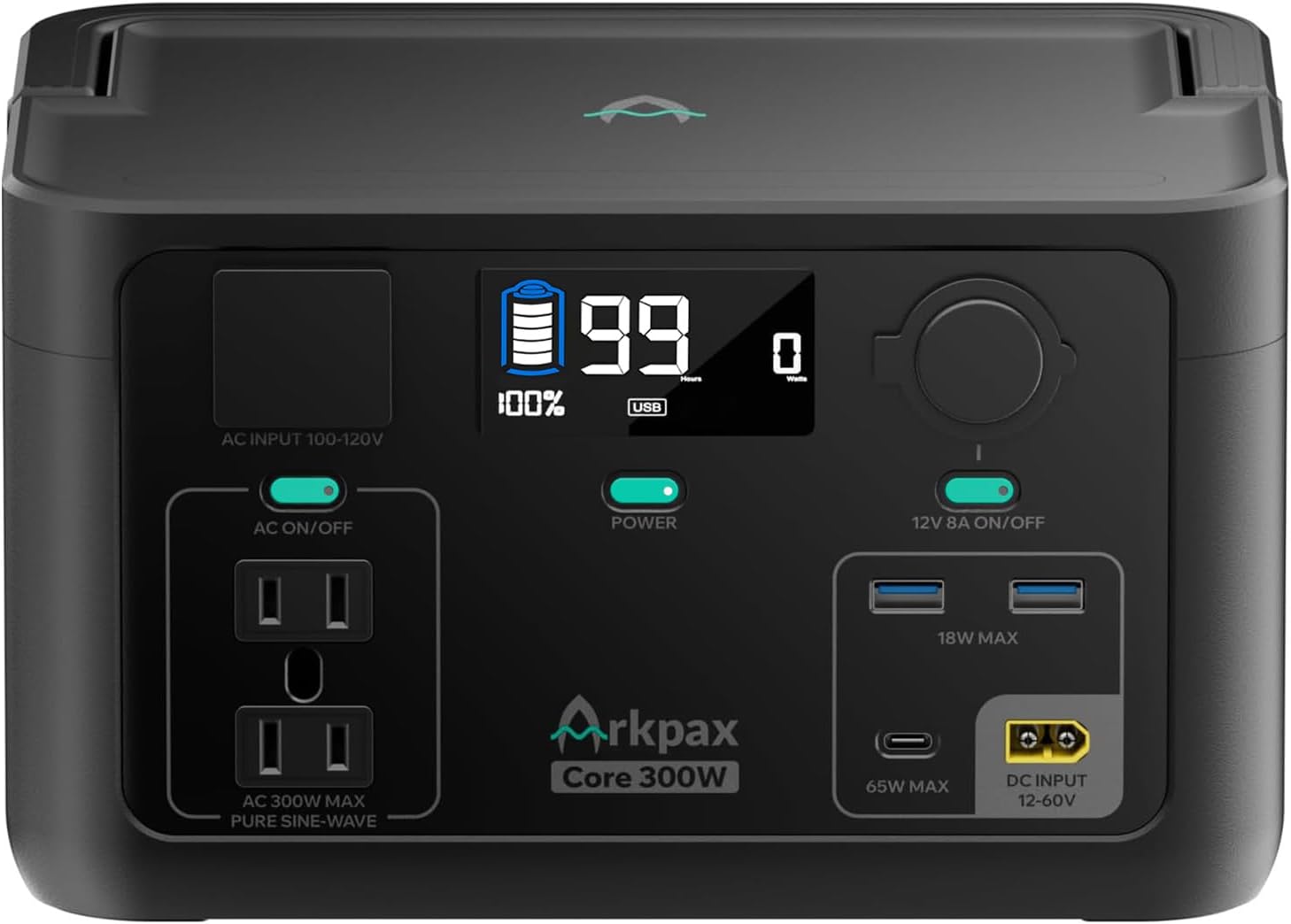
The battery: Portable Power Station 300W, 600W Surge Solar Generator 192Wh
 Visit on Amazon →
Here is how I read this unit for a fridge job. The 192Wh is the number that matters. The 300W continuous and 600W surge rating is headroom you will never use with a compressor fridge, which draws a fraction of that, and that is fine. Headroom is not a flaw.
What 192Wh buys you is honest and limited. It is an overnight battery, a day-trip battery, and an outage battery for one fridge. It is not a week-long battery, and if you want to run a fridge for four days off grid you should be shopping in the 500Wh to 1,000Wh class instead. Solar input on a unit this size is a top-up, not a plan. A panel that fits in a van will not keep pace with a fridge in July, so treat the sun as a bonus and the wall outlet as the real charger.
Flaws but not dealbreakers: 192Wh means daily recharging. Park somewhere without an outlet and you are running a deficit you cannot solar your way out of. Size up if that is your trip.
Anyone who needs a fridge cold overnight, through an outage, or across a weekend drive should start here.
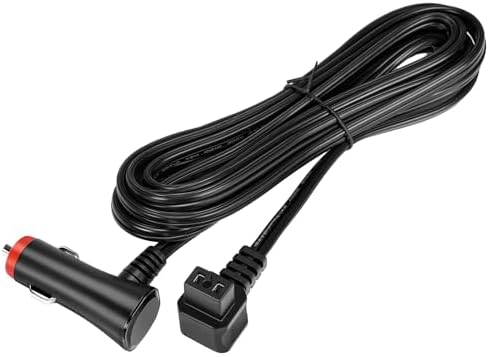
The cord: BougeRV 12V/24V DC Power Cord for 12V Car Refrigerator, Fits Most Brands
 Visit on Amazon →
This is the piece that makes the whole setup efficient. It lets the fridge pull 12V or 24V DC straight from the station's DC socket instead of running through the AC brick and the inverter. One conversion instead of two, and no inverter fan running all night.
The name says it fits most brands, which is a promise, not a guarantee. Check the inlet on your own fridge before you order, because compressor fridges use a handful of different plugs and the wrong one is a return. The 12V/24V rating covers both common system voltages, which matters if the cord ever moves between a 12V van and a 24V setup.
Flaws but not dealbreakers: It is a cable. It will not fix a fridge that wants more current than your station's DC port can supply, and it will not fix a loose inlet on the fridge side.
Anyone running a 12V compressor fridge off a power station, a car socket, or a van circuit should own one of these.
Step one: do the load math before you buy anything
Your fridge's label will list amps or watts. Amps times volts gives watts, so a fridge rated at 4A on 12V is a 48W load while the compressor runs. Compressors do not run constantly. They cycle.
Here is the arithmetic I run, using a small fridge that draws about 45W while running and cycles roughly one third of the time in mild weather:
- 45W x 0.33 duty cycle = about 15Wh per hour.
- 15Wh x 24 hours = about 360Wh per day.
Now compare that to the bucket. A 192Wh station covers roughly 12 hours at that rate, which is a night, not a day and a night. In a hot van the duty cycle climbs toward one half and your overnight window shrinks. Pre-chilling food at home and keeping the fridge full and out of direct sun are not lifestyle advice, they are load management.
Run this arithmetic with your own numbers before you buy. If your answer lands near 700Wh per day, buy a bigger station.
Step two: feed the fridge on DC, never through the AC brick
An inverter is a converter with a fan. It takes 12V DC from the battery, chops it into AC, and then your fridge's power brick takes that AC and turns it straight back into 12V DC. Every step loses a slice of your watt-hours as heat, and the inverter fan runs all night next to your head.
Use the DC socket instead. That is the entire reason the cord exists. The fridge pulls from the battery through a fuse and a plug, nothing else.
If your fridge has no DC inlet at all, you are stuck with the brick, and you should size the battery up by roughly 20 percent to cover the conversion losses.
Step three: match the cord to both ends
Three checks before the cord goes in the cart.
- The fridge end. Compressor fridges use different inlets. Look at the port on your fridge, not the brand logo, and confirm the cord's plug matches it.
- The station end. Small stations typically use a 12V cigarette-style socket, which is what this cord expects. If your station uses a barrel or Anderson connector, you need an adapter, not a different cord.
- The voltage. The cord is rated for 12V and 24V, so it covers both. Your fridge, however, is almost certainly a 12V appliance and should never see 24V. Keep the cord on a 12V source.
Also check the fuse. A fused plug is the difference between a bad connection and a melted one.
Step four: connect in the right order and verify
- Unplug the fridge from the car socket or the AC brick.
- Plug the cord into the fridge first. A dead cord end is safer than a live one.
- Plug the cord into the station's DC socket.
- Turn the station's DC output on if it has a switch for it.
- Listen for the compressor. It should start within a few minutes if the fridge is above its set temperature.
- After 15 minutes, feel the plug at the station end. Warm is normal. Hot means a poor contact or an undersized cord, so stop and check the fit.
Then set the fridge to 37 to 40 degrees Fahrenheit and leave it alone. Every time you open the lid you dump cold air and buy back duty cycle.
Step five: set the fridge's low voltage cutoff
Compressor fridges ship with a battery protection setting, usually marked Low, Medium, and High. That setting decides when the fridge shuts itself off to protect whatever battery it is drawing from.
On a car or van starter battery you want High, because a dead starter battery is a bad afternoon. On a power station, the station already protects itself with its own battery management, so set the fridge to Low or Medium. Leaving it on High is a common mistake, and it makes the fridge quit early while the station still has charge in it.
Step six: stretch the watt-hours
- Pre-chill the fridge on wall power the night before you leave. The compressor has less work to do once you are on battery.
- Keep it full. Cold mass holds cold, and a nearly empty fridge cycles more.
- Shade the fridge and ventilate the space around it. A compressor that cannot dump heat runs longer.
- Set the temperature to 38 degrees, not 32. Food safety does not require a frozen fridge.
- Batch your openings. One long look beats five quick ones.
Step seven: recharge on a schedule
A 192Wh battery is a daily habit, not a weekly one. The routine that works:
- Charge from the wall or from the car while you drive.
- Top up in the evening before the overnight pull, not in the morning after it.
- If you are running a solar panel, plug it in during the day and treat whatever it adds as a bonus. Do not plan your night around it.
Track it for two or three days and you will learn your fridge's real appetite. After that the system becomes a habit you stop thinking about.
What this setup costs
Two line items: the station and the cord. Check current Amazon price on both, because listings move and I will not quote a number that might be stale by the time you read this.
The way to think about it is cost per night. Use the setup 30 nights a year for three years and that is 90 nights, so you can divide whatever you paid by 90. Most people find the per-night number is smaller than one restaurant meal, which is the comparison that actually matters when you are deciding whether to keep a fridge in the van.
The approaches that lose here
A 1,000Wh or larger station. Great battery, wrong size for one fridge. You are paying for capacity you will not cycle, and you are lifting far more weight to do it. Buy that class only if the same battery also has to run a laptop, a CPAP, and lights.
The AC brick and inverter. Covered above. Two conversions, more heat, more fan noise, fewer watt-hours.
A second van battery with an isolator. This is the right answer for full-time van life, and it is more wiring, more money, and a job you cannot undo in a rental. The power station wins when you want the fridge cold on weekends and the battery out of the van the rest of the time.
A gas generator. Noise, fuel, exhaust, and a fridge that only stays cold while the machine runs. For one compressor fridge, no.
Ice and a cooler. Honest, cheap, and it works for a weekend. It stops working on day three, when the ice is water.
What this setup will not do
- It will not run a fridge for a week. The bucket is 192Wh, and the arithmetic in step one shows you the wall.
- It will not survive a 100 degree van without help. Shade, ventilation, and pre-chilled food are not optional in that weather.
- It will not run high-draw appliances. A 300W continuous rating covers a fridge, a phone, and a laptop. A microwave or a coffee maker is a different article and a different battery.
- It will not charge fast enough from a small panel to keep pace with a fridge in summer.
The short version
Do the duty cycle math first, buy the DC cord so the fridge never touches the inverter, set the fridge's battery protection to Low, and recharge the station every day. A 192Wh station and a fused 12V cord will keep a small compressor fridge cold overnight and across a weekend drive, and they will do it quietly.
That is the job. Size the bucket, skip the inverter, and let the compressor do the rest.